Tall Man Run
- 4.0
- Rating
- 100.00M
- Installs
- Free
- Price

 Analysis by App-foxy
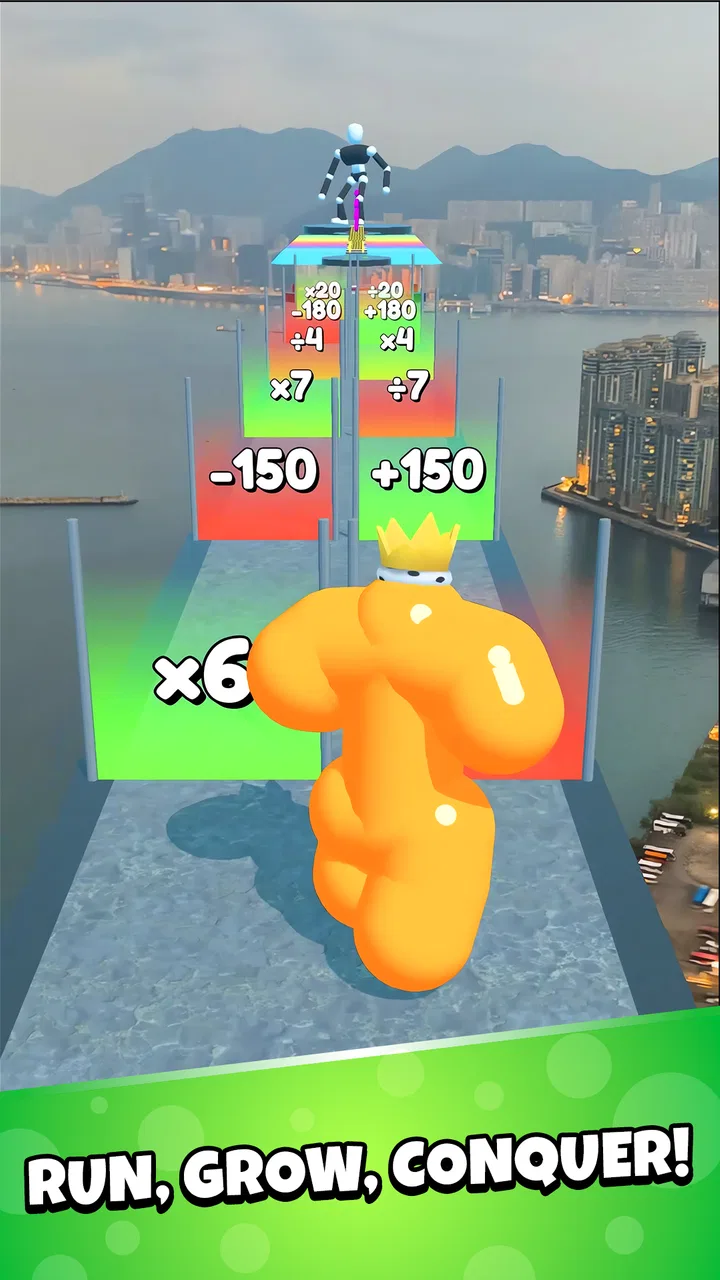
I spent time with Tall Man Run as a quick, casual game, and my first impression was clear: it is built around an idea you understand almost immediately. You guide a running character through lanes and gates, trying to grow taller or wider before reaching the finish. The appeal is not a complicated story or a deep control system. It is the satisfying visual change from a small runner into an oversized one, followed by the question of whether that extra size will actually help you survive the next obstacle.
That simplicity makes it easy to recommend for short breaks. I can imagine opening it while waiting for a coffee, playing a few attempts, and putting it away without needing to remember a plot or learn a long list of controls. At the same time, the same simplicity limits how long it holds my attention. This is a game about quick decisions, immediate feedback, and light replay value rather than a long-term challenge for players who want a complex progression system.
How the current version feels to play
The basic rhythm is straightforward. Your character runs forward automatically, while you guide movement from side to side. Gates and obstacles ask you to choose a route, and the visible change in your character’s height or width gives every decision an immediate consequence. A good choice makes the runner look more powerful; a poor one can leave you smaller than expected when the course becomes demanding.
You May Also Like

 Blood Strike: 2.5 Anniversary
Blood Strike’s Loadouts Turn Every Drop Into a Tactical Gamble
A close look at Blood Strike’s custom loadouts: how fast access to signature weapons reshapes its battle royale rhythm, rewards preparation, and narrows the gap between fights.

 Pandora - Music & Podcasts
Pandora’s Music Is Easy to Start, but Harder to Recover
Pandora’s strength is its low-effort path from a seed to a station. Its weak spot is how much confidence it asks you to place in connection, setup, and quiet recovery.

 8 Ball Pool
 Is Built on Rivalries, Rematches, and Routine
A close look at the rivalries, rematches, shared routines, and unanswered safety questions that turn a quick pool match into a persistent mobile community.

 Samsung Music
’s Quiet Strength Is Playing What You Already Own
Its reach comes less from spectacle than from dependable access to a personal library. That simplicity is both the app’s strongest retention engine and its ceiling.

 AccuWeather: Weather Radar
AccuWeather Review: A Quick, Clear Forecast for Everyday Decisions
For everyday plans, the best forecast is the one you can understand quickly. AccuWeather makes rain timing, radar, and local conditions easy to act on, with a few trade-offs.

 Hill Climb Racing
Why Hill Climb Racing Still Turns Crashes Into One More Run
A tiny car, a bumpy hill and one more upgrade: Hill Climb Racing keeps resurfacing because its simple chaos makes every near-miss feel personal.
More From Our News Desk
View All News


I found the controls approachable because there is very little between the player and the action. You do not spend the opening minutes adjusting complicated settings or learning several abilities. The game communicates its central idea through movement and scale. When the character becomes taller, the result is obvious on screen, which is useful for younger players and anyone who wants a game that can be understood without instructions.
The best moments come from weighing two goals that do not always feel identical. Increasing height is visually satisfying, but becoming wider can also matter when the course presents a different kind of challenge. That creates a small but meaningful layer of judgment. I was not simply choosing the biggest number available; I was also thinking about the shape of the runner and the space ahead.
That decision-making is deliberately light. You are not planning several turns in advance as you might in a traditional puzzle game. Instead, you read the next section of track, move toward the more useful gate, and react quickly. The result is suitable for casual play, though experienced arcade players may find the choices predictable after enough runs.
The finish gives each attempt a natural payoff. Reaching it with a large character feels rewarding because the transformation is easy to see, even when the underlying challenge is modest. I also like that the game does not require a long uninterrupted session. A single run has the shape of a complete activity, so it works better than many casual games when you only have a few minutes available.
Why the size mechanic works
The central growth mechanic is more effective than the short store summary suggests because it turns abstract progress into something physical. Instead of seeing only a score rise, I watch the runner become visibly taller or broader. That makes mistakes easy to understand. If I choose a poor gate, I can immediately see what I lost, and the next attempt gives me a reason to try a different route.
One useful habit is to stop treating every gate as a simple “more is better” choice. I get better results when I look at the upcoming obstacle before committing to a route. The safest-looking option is not always the most useful one, and a temporary sacrifice can sometimes leave the character in a better position for the final stretch. This is one of the game’s more interesting trade-offs, even though it remains accessible.
Another practical tip is to avoid overcorrecting. Because the runner moves continuously, frantic swipes can turn a good route into a bad one. I prefer short, deliberate movements and then a quick adjustment when the next gate becomes clear. That approach feels more reliable than trying to steer constantly from one side of the track to the other.
The game is also a reasonable introduction to lane-based arcade controls. A child or a new mobile player can understand the objective after watching one attempt, while an adult can still enjoy the brief satisfaction of improving a run. The Everyone 10+ content rating places it in a family-friendly space, although parents should still consider whether the game’s repeated short attempts and optional purchases fit the way their child uses a phone or tablet.
What has changed and what that means
The current version is 1.93, which tells me the game has continued beyond its original launch rather than remaining at its first release state. It first appeared on January 13, 2022, and the present build gives existing players a more mature version to return to. I would not treat the version number alone as proof of a particular feature or overhaul, but it is relevant when deciding whether to install it today: the game is not being presented as an untouched launch build.
For someone who played near release, the most important practical point is that the core identity remains easy to recognize. The game still depends on running, choosing gates, and managing the character’s changing proportions. That continuity is helpful if you are returning after a long break, because you are unlikely to need to relearn a completely different concept before enjoying a run.
For a new player, the current state is more important than its launch history. I would install it expecting a polished casual loop, not a story-driven game or a deep competitive platform. The developer, Supersonic Studios LTD, has positioned it in the kind of mobile experience that can be understood quickly, and the large audience supports that reading: it has passed 100 million installs and holds a 4.0 average from around 489 thousand ratings.
Those figures suggest broad reach, but they do not guarantee that every player will enjoy the same amount of time with it. A popular casual game can be excellent for short sessions and still feel repetitive to someone looking for lasting variety. I see the audience size as evidence that the premise is easy to pick up, not as a reason to ignore the game’s limitations.
The game is free to install, which makes trying it low-risk. Optional in-app items range from $3.49 to $8.99 each. That pricing matters less during the first few runs, when the novelty of growth carries the experience, but it becomes more relevant if you are tempted to spend to smooth out the progression or make repeated play more convenient. I recommend playing normally first and deciding later whether any purchase genuinely improves your experience.
How it fits into everyday play
My favorite use case is a short waiting period. Imagine standing in a queue with five minutes to spare: you can start a run, make a few choices, reach the finish, and stop without losing track of a larger campaign. The game’s visual feedback also makes it easy to play in a noisy environment, because you can understand the immediate goal from the track and the runner without following dialogue.
It can also work as a low-pressure break between more demanding games. If I have just finished a competitive match or a difficult puzzle, I may not want another system that requires concentration for half an hour. This game offers a lighter alternative. The trade-off is that it does not provide the same strategic satisfaction as a serious puzzle title, nor the same sense of discovery as an exploration game.
For families, the simple controls are a strength, but shared-device play may expose a weakness: the experience is designed around individual runs rather than a rich local multiplayer format. If your main goal is to play together on one screen, another casual game built specifically for head-to-head or cooperative sessions would be a better choice. This one is more naturally suited to taking turns and comparing how each person handles the course.
It is also worth thinking about attention span. The quick loop can be convenient, yet it can encourage “one more attempt” behavior because each run feels short. I would avoid presenting it as a background activity for a child who already struggles to stop using a device. The age rating is Everyone 10+, but suitability is still personal, especially when free-to-play design and optional purchases are involved.
Where it stands beside other casual games
Compared with endless runners, this game feels more focused on route selection and visible character growth than on maintaining a high score over an endless distance. That makes it easier to understand and less intimidating for new players. On the other hand, endless runners often offer more demanding timing, more varied objectives, or a stronger reason to master precise movement over a longer session.
Compared with puzzle games, the decisions here are faster and more physical. You are reading the track while moving rather than stopping to analyze a board. That is a good fit if you want immediate action, but not if you prefer solving a problem at your own pace. Compared with collection-heavy casual games, it also feels less dependent on building a large inventory or managing many menus.
The most important difference is the visual payoff. The changing proportions of the runner are the game’s personality. If that sight makes you smile, the simple structure can be enough to carry several sessions. If you do not care about watching the character grow, there is not much depth underneath the central loop to compensate.
I would skip it if you are looking for a demanding platformer, a substantial campaign, or a game where every attempt teaches a complex new technique. I would also choose another option if ads, repeated runs, or optional spending are especially irritating to you. The free entry point is attractive, but casual free-to-play games can feel less satisfying once the initial novelty fades.
Small strategies that improve the experience
My first recommendation is to judge the whole upcoming section rather than the nearest gate alone. Even when the next choice looks attractive, the following obstacle may reward a different shape or position. Looking one step ahead turns the game from pure reaction into a simple planning exercise without making it difficult.
Second, use the edges of the track deliberately. Staying near one side can make a preferred gate easier to reach, but it can also leave less room for correction. I get more consistent results by moving toward a target early, then returning toward a safer central position when the route allows it. This is especially useful when I am playing quickly and do not want to make a last-second swipe.
Third, treat failed attempts as route tests rather than wasted time. Because a run is short, I can remember which gate caused trouble and change only that decision next time. That is more productive than changing everything at once. It also reveals whether a mistake came from choosing the wrong growth option or simply moving too late.
Finally, do not assume that the biggest visible character guarantees an easy finish. The game’s fun comes partly from the tension between growth and control. A large runner can feel powerful, but the course still asks you to position it correctly. Keeping that distinction in mind makes the final stretch more interesting and prevents the game from becoming a simple search for the largest number.
Who should install it now?
I think it is a good match for players who want a free casual game with immediate controls, bright visual feedback, and runs that fit into spare moments. It is especially approachable for people who do not usually play mobile games, because the objective is clear without a tutorial-heavy introduction. The Everyone 10+ rating also makes it a reasonable candidate for families who are comfortable managing screen time and purchases.
Existing users should find the current version familiar enough to return to without starting from zero. New users can expect a well-established casual format rather than an experimental concept. The large install base and thousands of reviews show that the game has found a substantial audience, while the 4.0 average suggests a generally positive reception with room for individual preferences and criticism.
I would be more cautious for players who need deep progression, highly varied levels, or a strong reason to keep playing for months. The game’s strength is its immediate loop, and that is also its main limitation. Once the growth-and-obstacle pattern becomes familiar, the experience depends heavily on whether you enjoy repeating short runs to improve your choices.
My final view is favorable but measured. Tall Man Run is at its best as a quick, readable arcade break, not as a complete replacement for a deeper mobile game. I like the way height and width turn simple gate choices into visible consequences, and I appreciate that a run can be finished without a major time commitment. I would install it for casual sessions, recommend trying it before spending anything, and move on to a more strategic or story-focused alternative if the central growth trick stops feeling fresh.
FAQs for Tall Man Run
01What is the main objective of Tall Man Run?
Tall Man Run is a unique endless runner game where the primary goal is to navigate through various obstacles while collecting power-ups that increase the height and speed of your character. The taller and faster you become, the higher your score will be. It's all about achieving the longest run possible and unlocking new levels.
02Is Tall Man Run free to play, or does it require in-app purchases?
Tall Man Run is free to download and play, offering a variety of levels and challenges at no initial cost. However, it includes optional in-app purchases for players who wish to enhance their gameplay experience with additional power-ups, characters, or ad-free sessions. These purchases are not necessary to enjoy the game fully.
03What are the system requirements for Tall Man Run on Android and iOS?
For Android, Tall Man Run requires version 5.0 or higher, and for iOS, it needs iOS 10.0 or later. It’s designed to run smoothly on most modern smartphones and tablets, but it's always a good idea to ensure your device is updated to the latest software for optimal performance.
04How does Tall Man Run ensure user privacy and data security?
Tall Man Run adheres to strict privacy policies to protect user data. It collects minimal information necessary for gameplay and does not share personal data with third parties without consent. Players can review the app’s privacy policy within the settings to understand what information is collected and how it is used.
05Can Tall Man Run be played offline, or is an internet connection required?
Tall Man Run can be enjoyed offline, making it perfect for users who may not always have access to the internet. However, certain features like leaderboards, updates, and in-app purchases require an internet connection. Playing offline will not limit your access to the core gameplay experience.
Pros
- Engaging and easy-to-understand gameplay.
- Colorful graphics that appeal to all ages.
- Quick levels perfect for short play sessions.
- Simple controls suitable for any skill level.
- Free-to-play with optional in-app purchases.
Cons
- Can become repetitive over time.
- Contains ads that might disrupt gameplay.
- Limited character customization options.
- Requires internet connection to play.
- May lack depth for seasoned gamers.

Tall Man Run
Gallery